
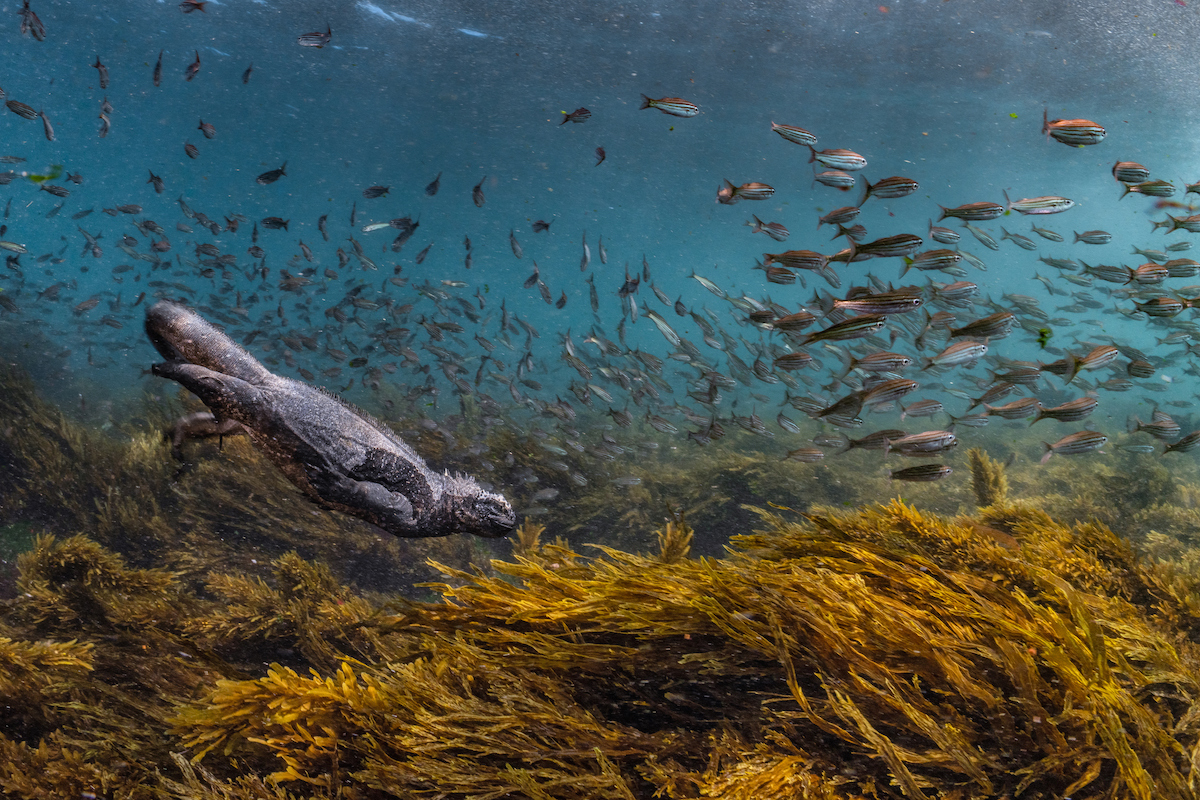
A Galapagos marine iguana, perfectly adapted to life at sea, swims in a forest of seaweed. Photo by Cristina Mittermeier
The Voyage
Protect the Migration Corridors
Location
Galapagos
Established
December 2021Areas of Impact
Partners
- Sony Alpha Universe
Background
The Galápagos Islands are a volcanic archipelago in the Pacific Ocean, about 1,000 kilometers off the coast of Ecuador. Known as the “living laboratory” that inspired Charles Darwin’s theory of evolution, their isolation and nutrient rich waters have given rise to the unique wildlife and endemic species for which they are renowned.
Here, vast schools of hammerhead sharks fill the water column. Marine iguanas cling to black lava rocks, looking almost prehistoric. Flightless cormorants appear as though they are part way through evolution.
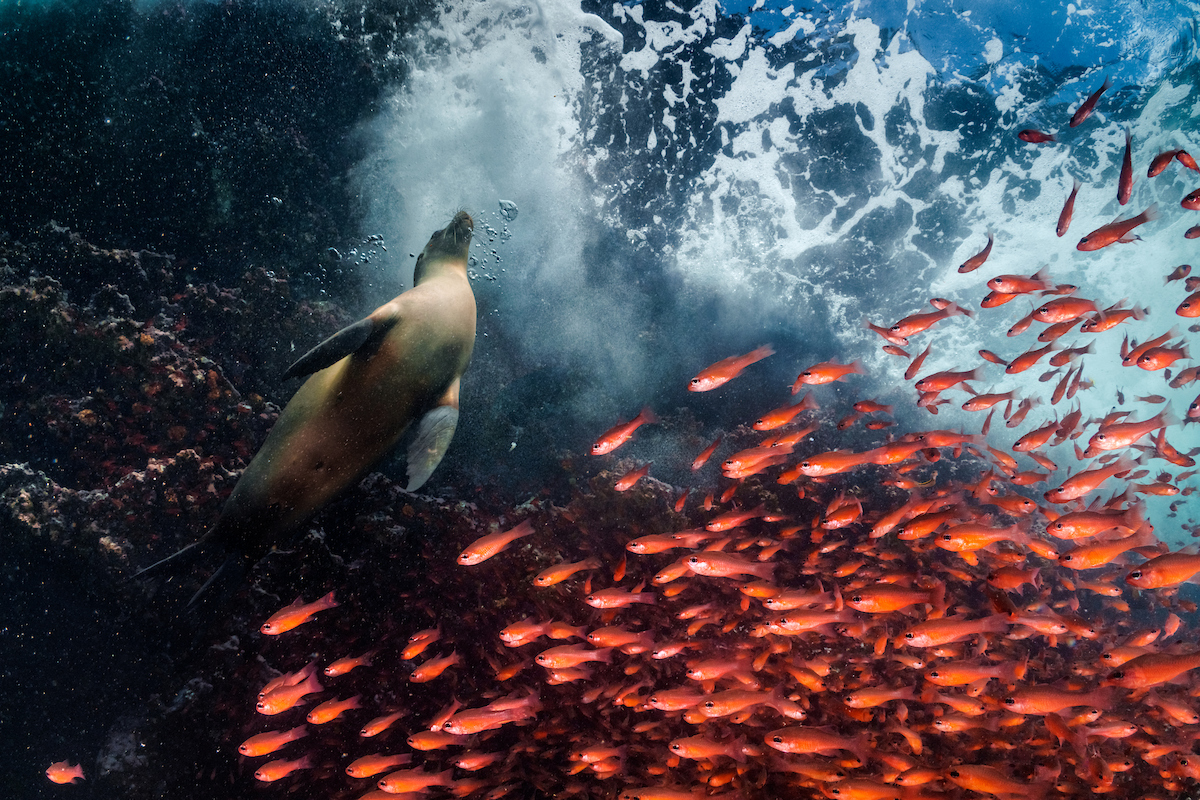
The waters surrounding the islands are powered by strong ocean currents that carry nutrients from the deep, fueling extraordinary life.
Nearly 3,000 marine species live here, and 20 percent exist nowhere else on Earth. Those currents connect the Galápagos to other islands like Malpelo, Cocos, and Coiba, forming a marine highway. Along these routes, whales, sea turtles, manta rays, and sharks travel vast distances in search of food.
The Galápagos Marine Reserve has been protected since 1998, but animals don’t know what a marine protected area is. As they move between islands along their migratory routes, they swim beyond protected waters and into areas where industrial fishing vessels often wait just outside reserve borders.
The Mission
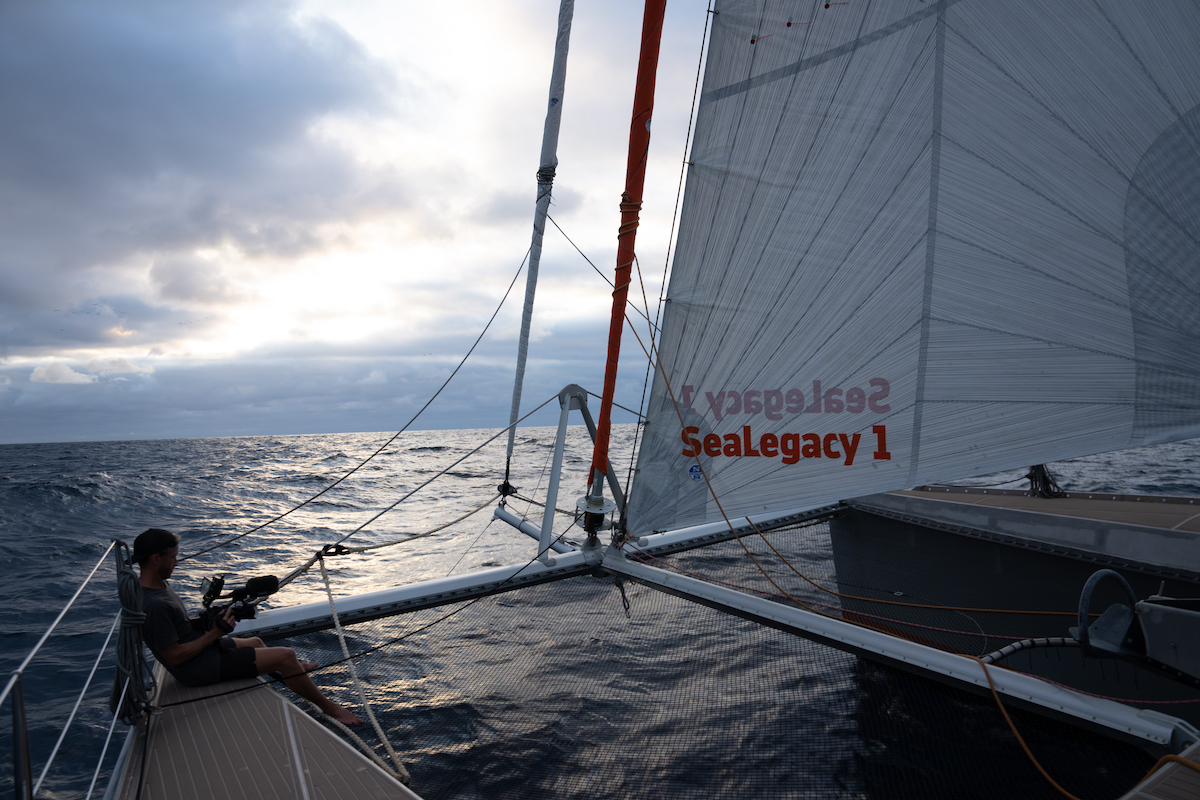
We took our boat, SeaLegacy 1, to the Galápagos Islands to help protect these animals and the migration corridors they depend on. Our mission was simple: collect data that verifies species migrate between these archipelagos.
On board, we assembled a team that combined science, photography, and filmmaking, all working toward stronger protections in the region. The expedition included biologist and wildlife conservation photojournalist Lucas Bustamante, Galápagos National Park dive guide Javier Mahauad Wittmer, and marine biologist Sophia Green, who led the research to track animal movements between the islands. The rest of the SeaLegacy crew was there to bring the story to life.
While scientists conducted essential fieldwork, we captured what is truly happening in these remote waters. Green tagged animals, including a massive whale shark, allowing us to follow their movements across the Pacific. The more we understand where these animals travel and how they use these ocean corridors, the stronger the case for protecting them.
The Results
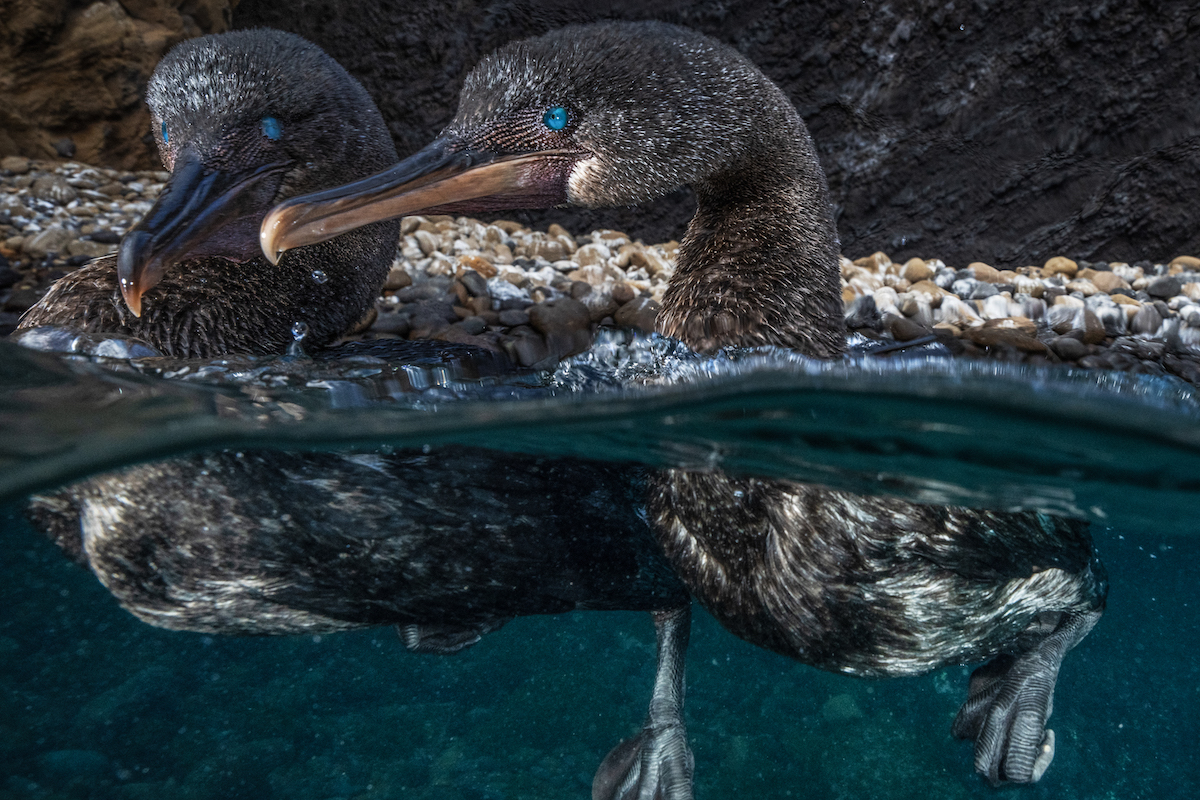
Flightless cormorant (endemic) in courtship dance
In January 2022, our efforts, alongside many organizations and partners working toward a shared goal, contributed to a historic victory for marine conservation.
Ecuadorian President Guillermo Lasso expanded the Galápagos Marine Reserve by 60,000 square kilometers, bringing the total protected area to 198,000 square kilometers.
The expansion includes a 30,000 square kilometer no take migratory corridor that connects the Galápagos Marine Reserve with a protected area in Costa Rica, creating a safer passage for wildlife moving between these critical ecosystems.
We remain hopeful that these strengthened protections will increase the survival of species traveling along this ocean highway. Places like the Galápagos are not only extraordinary for their beauty, but essential to the health of our oceans and the future of our planet.
Check out our mini expedition to Coiba, another stop along this important marine highway, to see why all of it is worth protecting.
