100 For the Ocean [2024-2025] Recipient: Coral Gardeners
In French Polynesia, with more than one hundred islands scattered across the center of the South Pacific, the ocean is life.
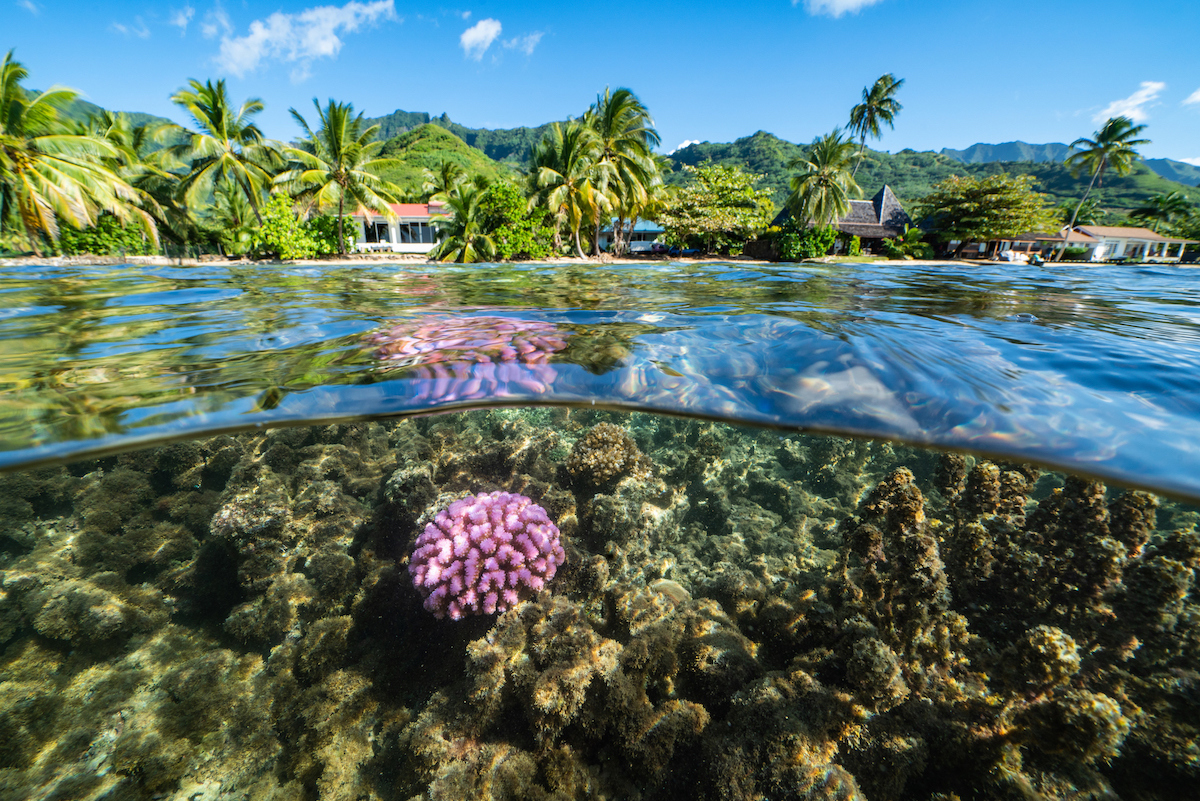
It is where Titouan Bernicot grew up, surfing above reefs so vibrant they looked painted, until the day he looked down and saw they had turned the color of bone. The panic quickly turned to action. Titouan and his friends started growing corals to bring their reef back to life. What began as a local effort in Mo’orea has since grown into Coral Gardeners, a global movement of scientists, gardeners, and innovators working to identify resilient coral, grow it in nurseries, and restore reefs. All it took was one person who decided to act. We made a short film to tell his story.
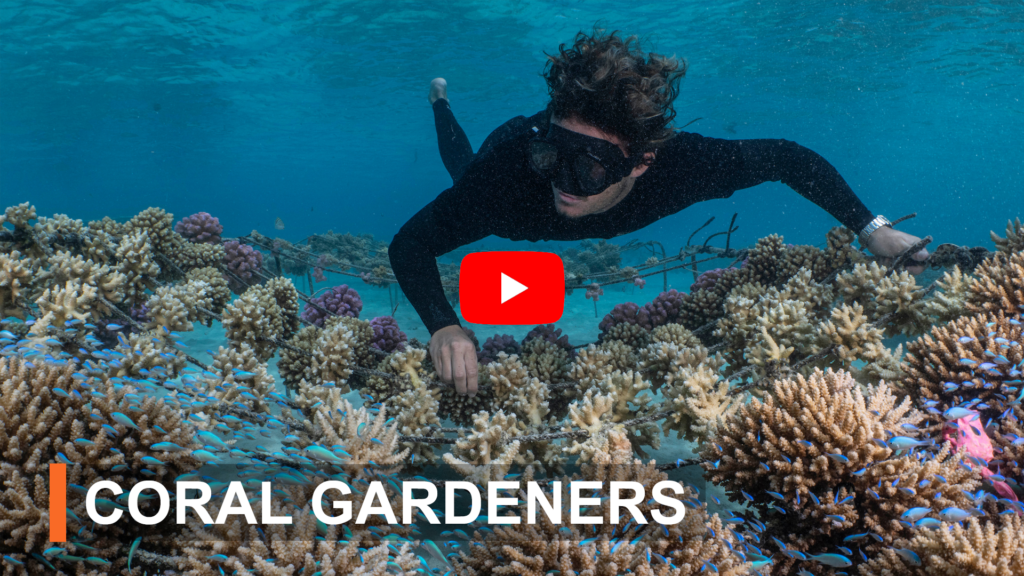
How Mitty came to know Titouan
Mitty met Titouan in 2017, on Mo’orea, a few days after she had come off a National Geographic expedition. She had heard there was a group of young people on the island trying to grow coral, so she went to find them. The office was modest. The boy who greeted her was twenty-one years old.
He was one of the most impressive young people she has ever met. He had walked away from high school because he could not bear to sit in a classroom while the reef he had grown up on turned white and died. No one was coming to save it. So he decided he would. He taught himself how to break coral, nurse the fragments on lines in the lagoon, and coax a dying reef back to life with his own hands.
What he had not learned, and what he asked Mitty to help him with, was how to survive the other ocean: the world of international conservation, of funders and boards, and the slow, patient machinery it takes to turn one brave idea into an organization that outlasts its founder. They spent the next few days together and she has been teaching him everything she knows ever since.
“He calls me Ocean Mom. I cannot tell you how proud that makes me.” — Cristina “Mitty” Mittermeier
The boy from that modest office now leads one of the most respected ocean restoration organizations in the world, working across three countries with a team approaching one hundred people. He is proof of the thing Mitty has believed her whole life and has never been able to prove with numbers: that one person who refuses to accept the death of a place can change the fate of it.
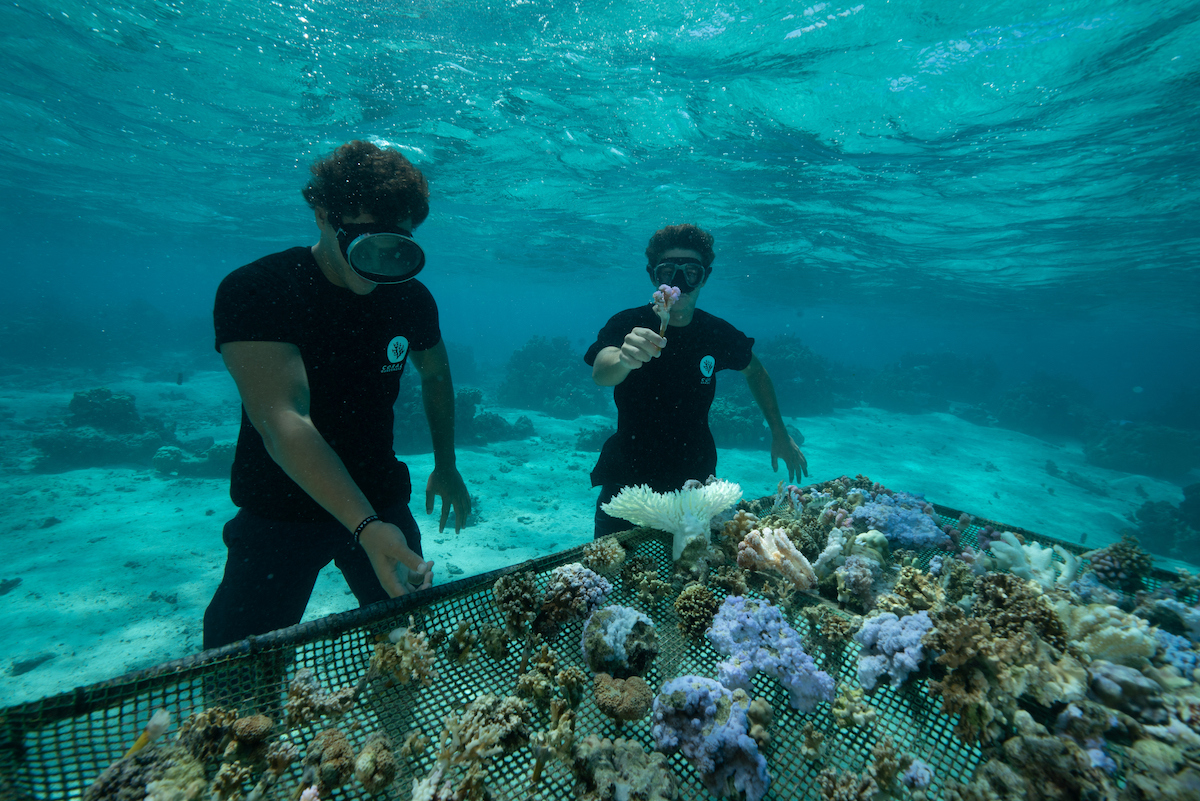
Why we believe in Coral Gardener’s work
A 2018 study found that coral bleaching was five times more frequent than it was four decades prior, and the situation has only gotten worse since. From one mass bleaching event to the next, and with a super El Niño setting in, many experts are wondering if coral reefs as we know them may disappear in our lifetime.
Corals draw most of their energy from tiny algae, called zooxanthellae, that live inside their tissue. When the water grows too warm, the algae turn toxic, so the coral expels them to survive, and in doing so loses its main source of food. Some recover. Many do not, especially as bleaching comes more often. Add pollution, overfishing, and ocean acidification, and it becomes reasonable to fear that we may be the last generation to live in a world with coral reefs.
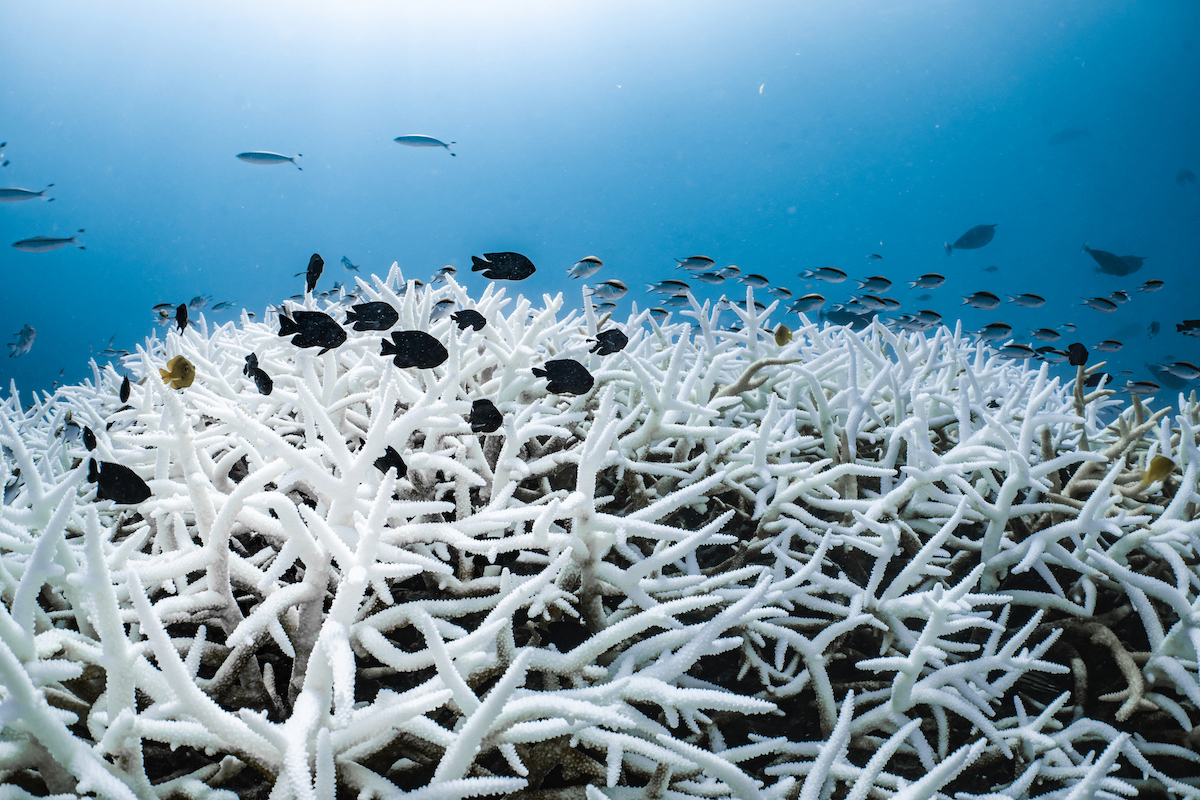
That does not have to be how the story ends.
A study not yet published from the Wildlife Conservation Society and Macquarie University, presented in June at the Our Ocean Conference in Kenya, found that roughly one-third of the world’s coral reefs may be able to withstand climate change impacts through 2050.
That also means we are on course to lose two-thirds of the world’s reefs by 2050, which is alarming. But there is a light inside that number. That resilient third may be the key to everything. Scientists can study what makes certain corals and their algae able to take the heat, and once we know which ones can survive, we can grow them, transplant them, and rebuild the reefs that cannot make it alone.
This is why the work of Coral Gardeners is so important, and why Titouan’s story matters beyond the shores of Mo’orea. What began with one surfer who would not accept a bleached reef as the end has become a model for how coral reefs might be saved around the world.
The film first premiered at Mountainfilm Festival in May, and it is now available to watch for free on YouTube!
WATCH HERE
And if you would like to support Coral Gardeners, you can donate here.