
SEALEGACY EXPEDITION
Get Fish Farms Out
Location
British Columbia
Established
2017Background
Salmon are a keystone species, forming the foundation of Pacific Northwest ecosystems. They feed orcas, bears, and eagles, and their carcasses bring marine nitrogen onto land, nourishing the coastal rainforests that define this place. For millennia, wild salmon have been central to the cultures and livelihoods of First Nations people as sustenance and as a sacred symbol of renewal and life.
Wild Pacific salmon in British Columbia a keystone species are largely in decline, and the reasons go beyond climate change alone. In Alaska, BC’s neighbor to the north, salmon populations remain comparatively healthy. The key difference between the two is that Alaska has never permitted open-net salmon farming in its waters. BC has, and the consequences have been severe.

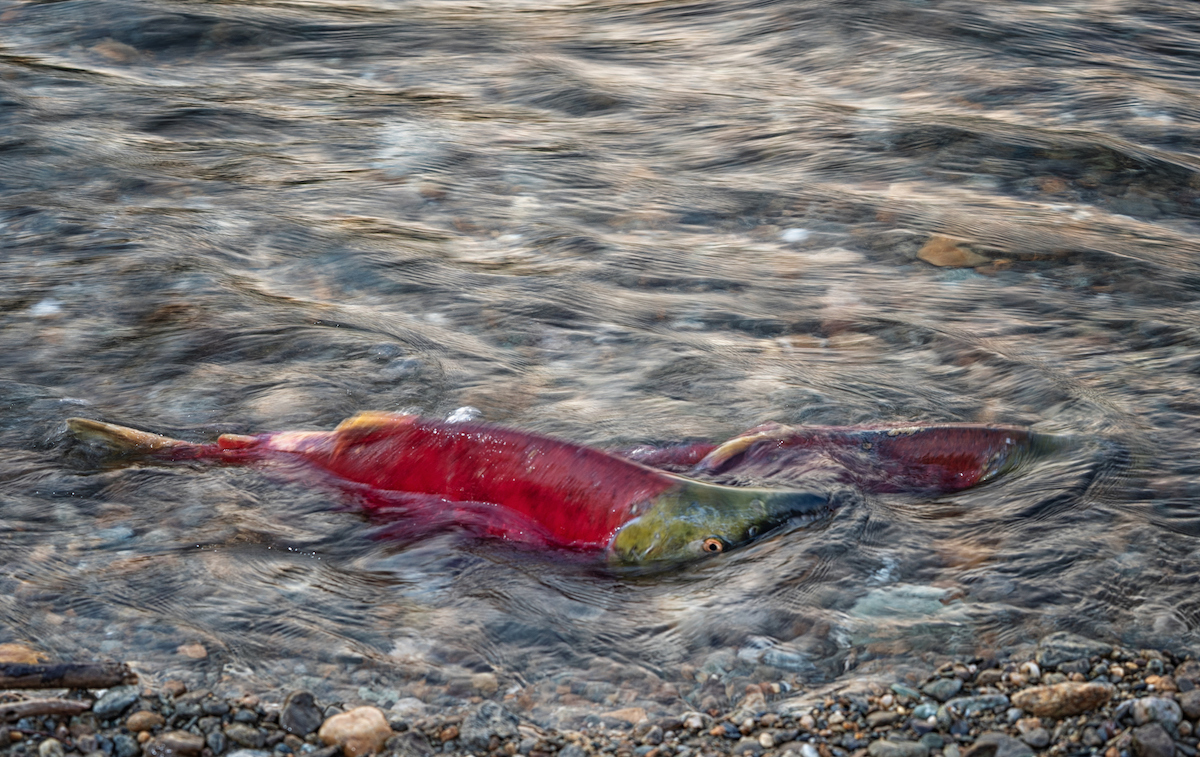
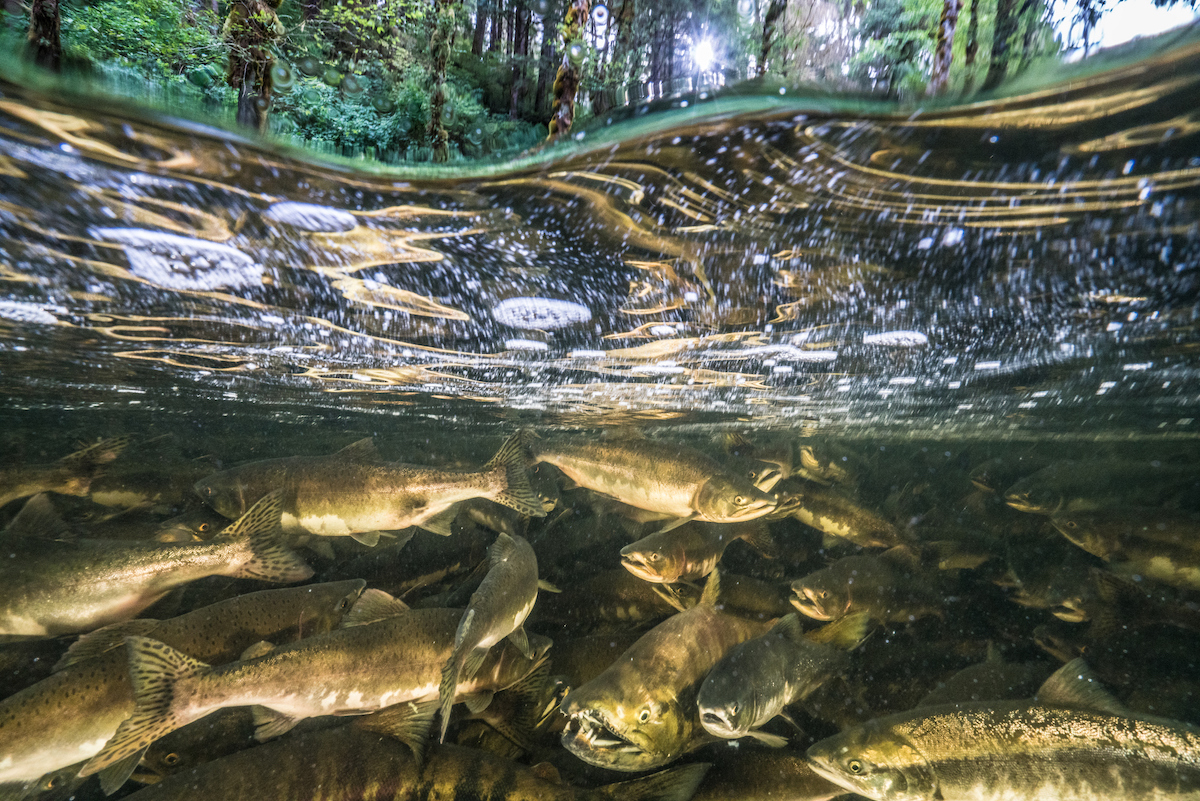
Sockeye salmon migrating up the Adams River in BC. Salmon can move upstream in surprisingly shallow waters.
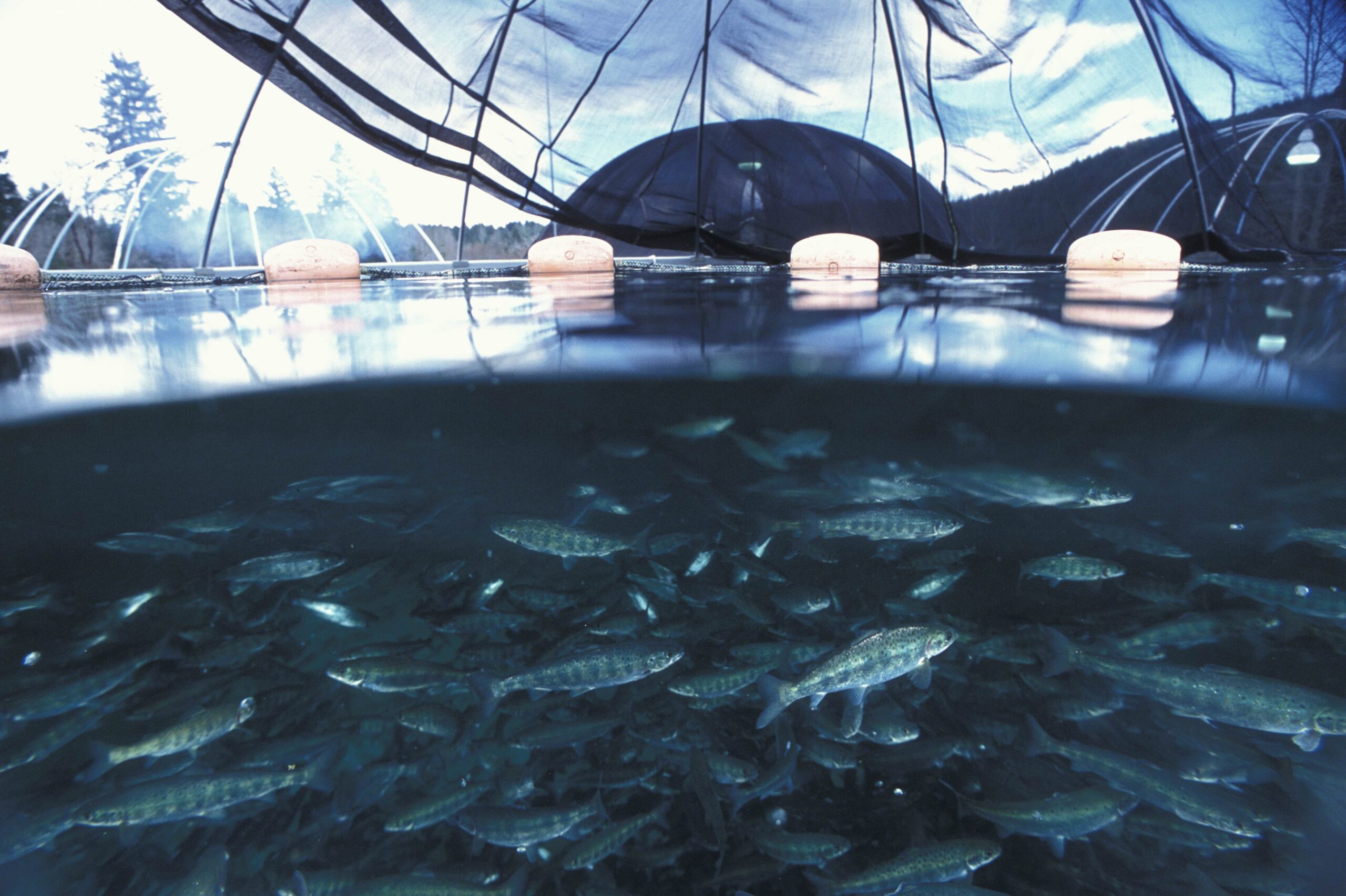
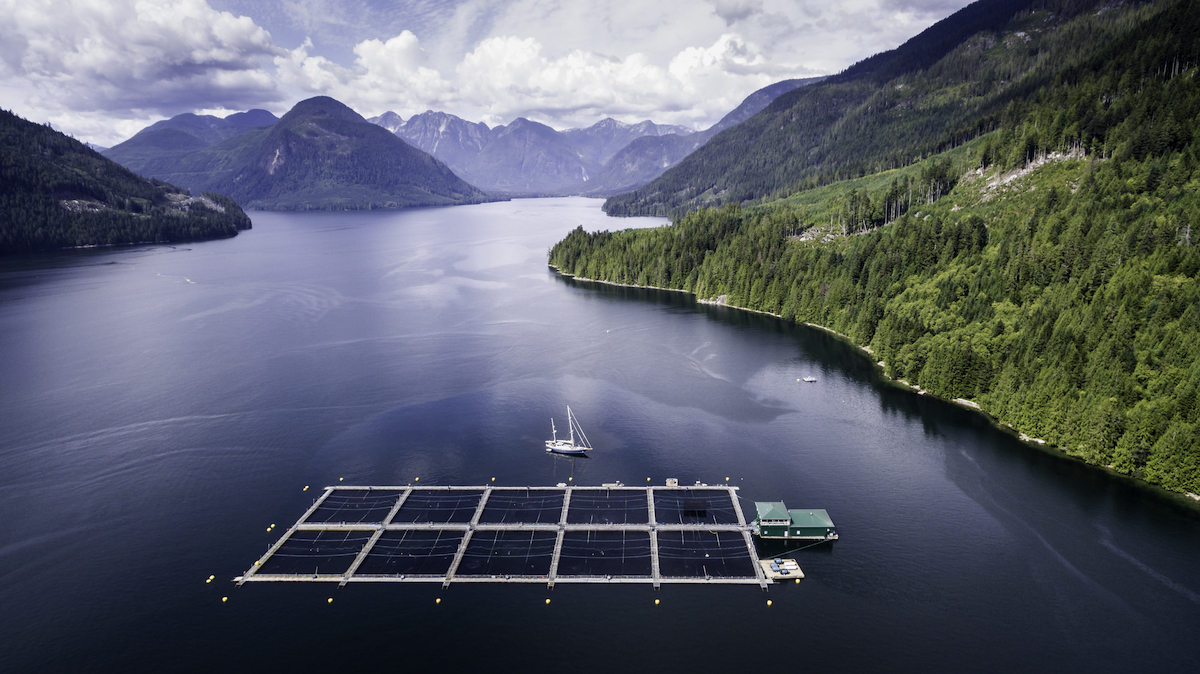
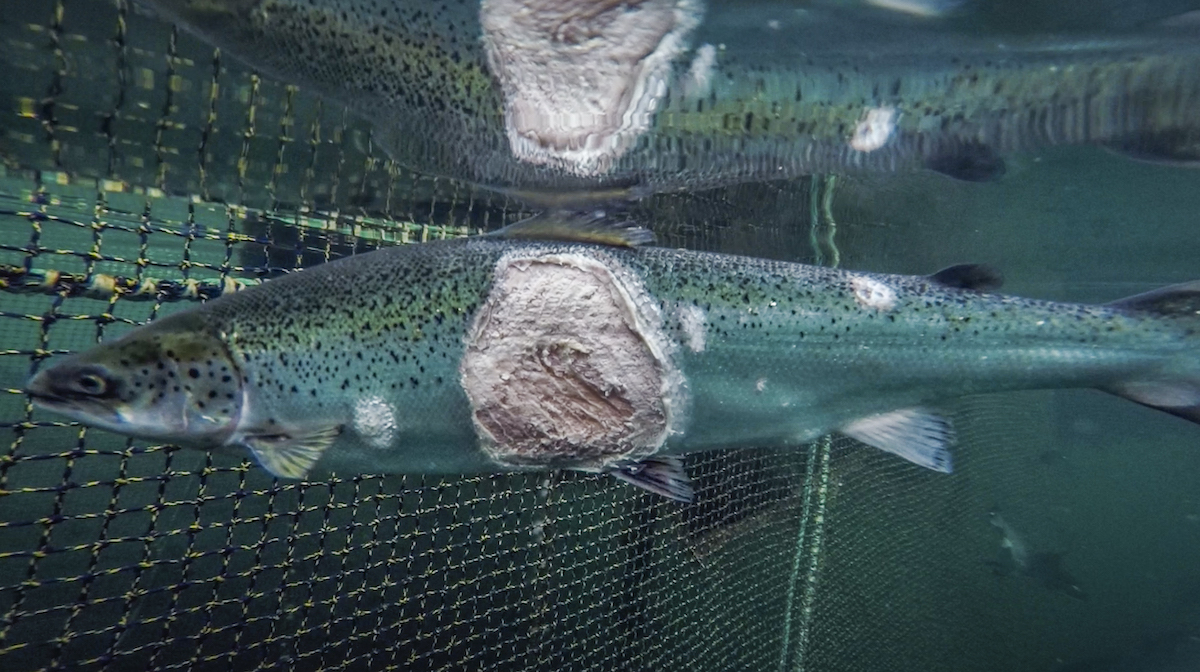
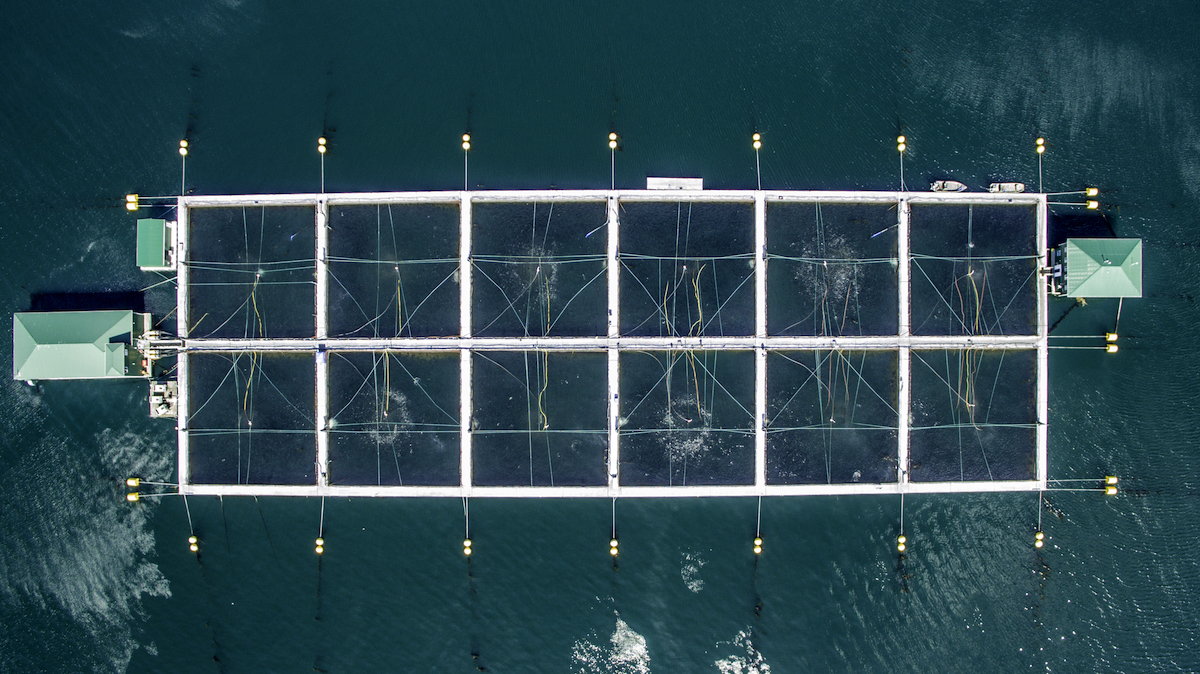
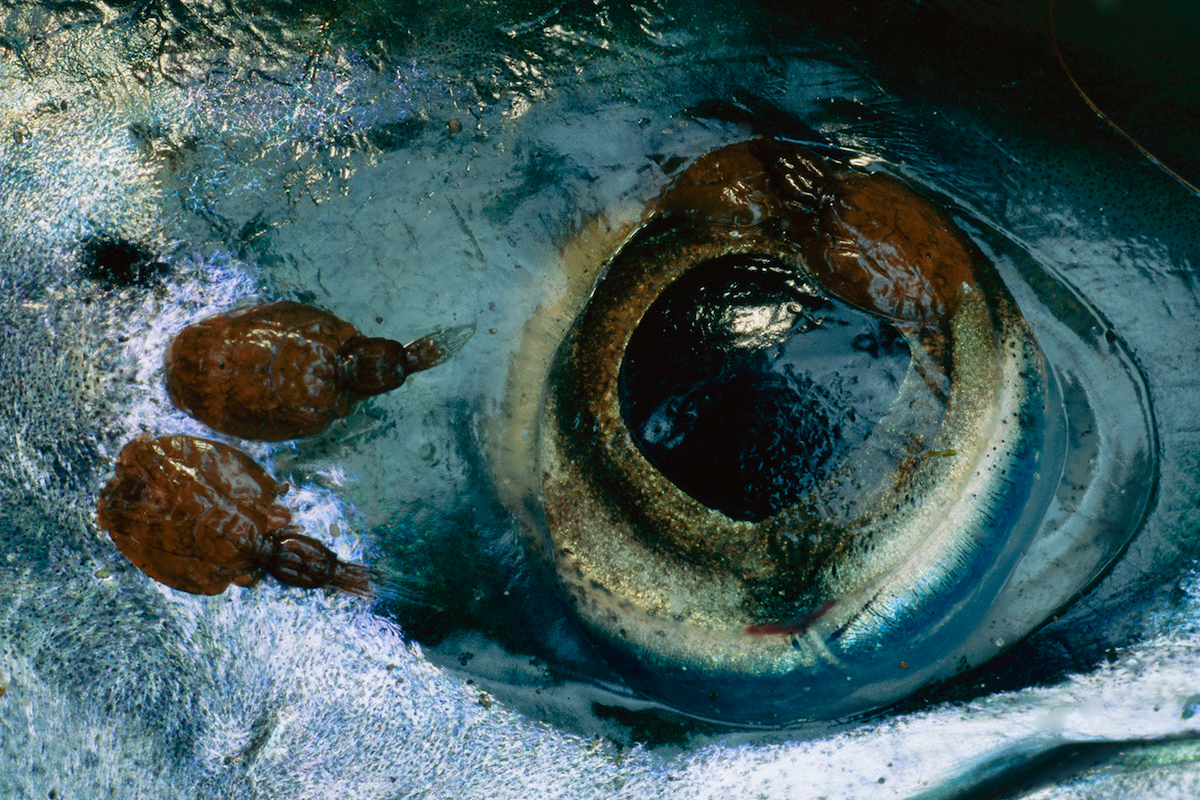
Open-net fish farms are enormous net pens submerged directly in the ocean, often placed along wild salmon migration routes. Waste and uneaten feed pollute the surrounding waters, degrading the habitat that wild salmon and countless other species depend on. Diseases spread rapidly through the densely packed fish and flow freely into surrounding waters, including piscine reovirus, sea lice, and the flesh-eating bacteria known as winter wound. The antibiotics used on these fish are creating antibiotic-resistent pathogens, which have spread to marine life like Pacific white-sided dolphins. And because salmon are carnivores, their feed contains wild-caught fish meal and oil, meaning the industry does not actually relieve pressure on wild fisheries.
Most of the farms operating along BC’s remote coastline are owned by Norwegian corporations. The profits leave the country while local communities, and First Nations peoples in particular, are left to bear the environmental cost. There is more than enough scientific evidence to tell us open-net salmon farms are doing far more harm than good. The question now is whether governments will act before the damage becomes irreversible.
The Mission
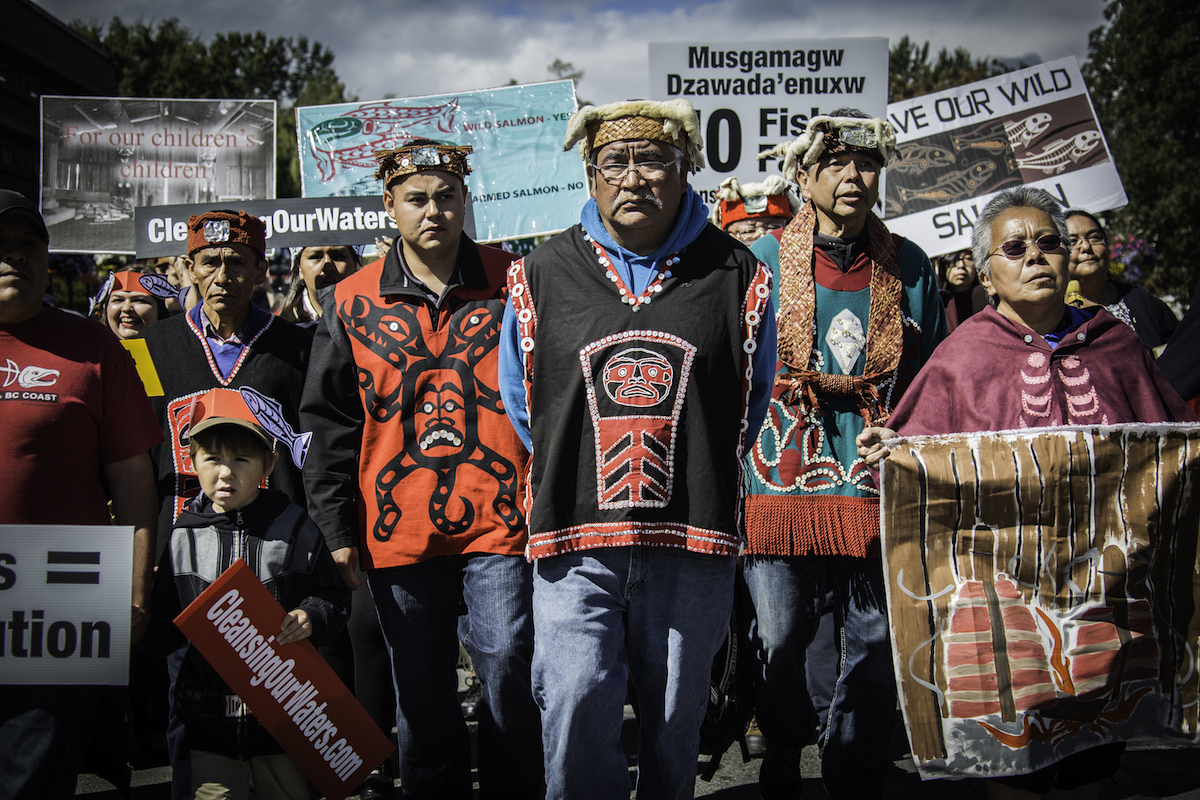
We collaborated with local organizations, scientists, and most importantly, the Musgamagw Dzawada’enuxw First Nations peoples whose territories these farms occupied without their consent. Our goal was to make the invisible visible, and to add our voices to the growing call to remove open-net salmon farms from BC waters.
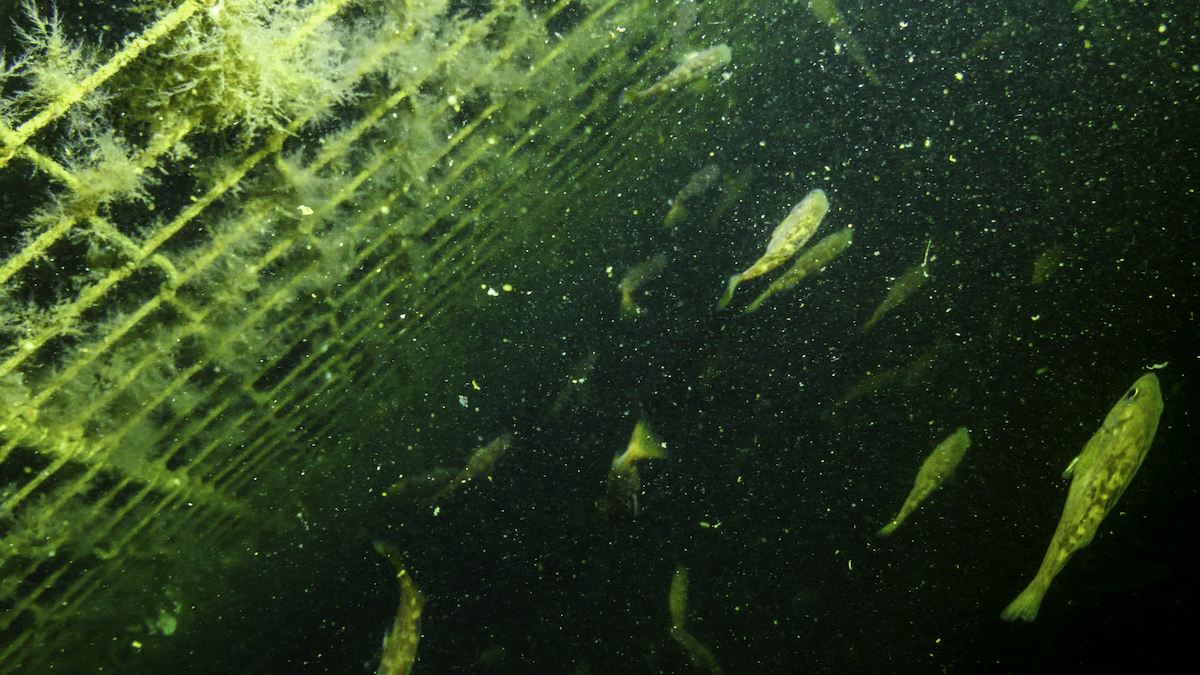
We travelled to the Broughton Archipelago to film inside these operations and document what we found. What we saw was shocking. Fish were packed into crowded pens, many with open flesh wounds, ulcers, and deformities. Visible pollution clouded the water around them. These are the fish sold in grocery stores across North America in the form of neatly-packed filets.
We amplified the voices of the Musgamagw Dzawada’enuxw First Nations peoples, paired with the footage we took at the salmon farms, and turned it into action through petitions, public outreach, and advocacy directed at the provincial and federal governments who hold the power to end these leases for good.
The Results
Since this campaign began, we have seen real, measurable change
In 2018, the BC provincial government reached a landmark agreement with local First Nations to phase out salmon farms in the area and create a farm-free migration corridor for wild Pacific salmon. In 2021, farms had been removed from the Discovery Islands as well.
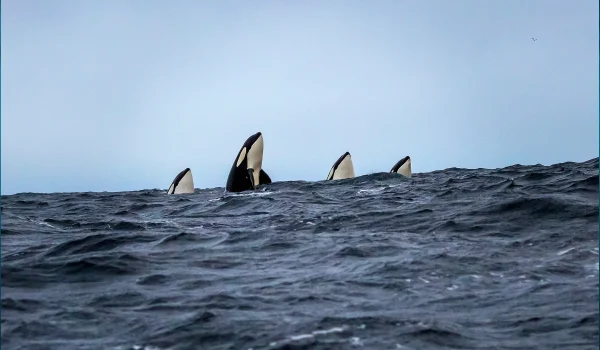
Since then, the recovery in these area has been remarkable. Creeks are filled with returning salmon, and the effects are being felt across the food chain, with orcas returning to the area in numbers not seen in years. A 2025 report documenting salmon recovery in the region concluded that salmon survival and returns improved significantly once farms were removed, echoing what First Nations in the area have witnessed firsthand for years.
There is still a long way to go.
Many farms continue to operate in BC waters, and the federal commitment to end them has been uncertain. Originally pledged in 2019 with a target of 2025, the phase-out was delayed to 2029. Now, under Prime Minister Mark Carney, there are signs the government may back out of the ban altogether.
In these times of uncertainty, our work doesn’t stop. Consumer choices remain one of the most powerful tools available. Every time someone chooses wild over farmed salmon at the grocery store, it sends a signal. And while we keep our eye on BC, open-net salmon farming is not a local problem. Operations in Chile and Argentina are expanding rapidly, bringing more damage to some of the most pristine coastal ecosystems in the Southern Hemisphere.
And so our fight against open-net salmon farms continues, in BC and beyond.
Fish Farm Gallery




#KnowYourSalmon
SeaLegacy June 19, 2018 11:17 am